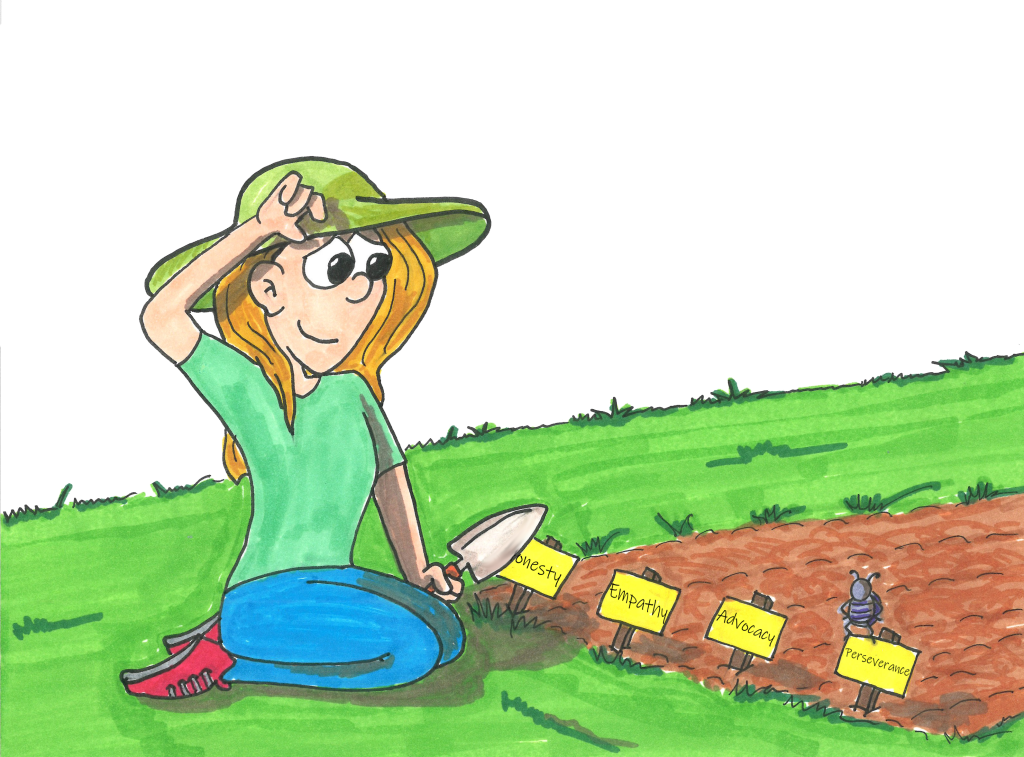
Planting the Seeds of Leadership Helps Students for Life

Many years ago, I was sitting with my principal, Traci Heuhs, in an end of the year wrap-up meeting.  As the conversation was winding down, she told me that I was a natural leader and asked how she could support me in expanding myself in the field of education. The comment took me aback and made my stomach churn. Leadership was something that felt uncomfortable to me. I most certainly did not have the confidence to be a leader, especially with my peers.
 
As I do with comments like this, I thought about it for a long time. 
 
What makes a good leader? 
 
What did my principal see in me that I didn’t see in myself?  
 
What was my responsibility to my students in truly understanding the complexity and necessity of leadership? 
 
Why was developing my own leadership style critical to all aspects of my life?
 
I realized that the only way I was going to be able to explore the idea of leadership was by leaning into that discomfort and pushing myself into new and challenging experiences. 
 
Maybe that’s the point.
 
Leadership correlates to power. Being a leader means you have influence.  I believe that is true, but it isn’t power for yourself.  It’s the power of your own character, and how you hone your own traits to lead change.
 
Being a leader is complex and difficult because you are developing a trajectory for both yourself and those around you. It is an important and critical role and needs to be viewed as such. It seems to me that if the weight of leadership isn’t always resting on your shoulders, holding you accountable, then you aren’t doing it right.
 
Leadership is about finding your voice and modeling how to listen, respond and advocate. It is about seeing the potential in others and guiding them to shine. Leadership is about speaking out on injustices and searching for solutions instead of wasting energy on complaints.  
 
It has taken me my whole life to establish my voice. Understanding how difficult that journey has been for myself has really made me think about an educator’s role in the development of character and leadership within their classroom walls. 
 
As an elementary teacher, understanding the importance of how to develop leadership in the youngest of learners is essential. It seems this is an area that is not heavily emphasized at the early grades, in large part because its focus and importance is usually attributed to older students. I would argue that sentiments like this one are part of the reason that we see so many students lost and uncertain of themselves later in their school careers, which is projected through their success and engagement in school.
 
Over the last 18 months, I have been a part of a conversation in my district around leadership, character and soft skills that are essential to the success of students at the secondary level. Sitting in these meetings, I have realized that helping students develop voice, leadership and advocacy of themselves can’t begin at the later grades. It needs to be an intentional progression over time that must be prioritized and attended to by the adults in that child’s life. Ultimately, it is about providing opportunities for students to build confidence and understanding of themselves by using their own strengths and personalities.
 
I know that many schools have character and leadership curriculum. For many students, these structures are enough to hone and develop these essential life skills. Like all learning though, many students need more personalized attention to recognize and understand their authentic selves. Understanding students deeply is critical, as the words, mannerisms and actions teachers use contribute to a student’s perception of themselves. Helping students explore and understand their voice is the key to helping students find and define leadership for themselves. Ultimately, it is the guidance and development of honesty, empathy, advocacy, perseverance and problem-solving skills. All these elements are critical in establishing a student’s voice, and what leadership looks like to them.
 
What I realize now from that meeting many years ago is that my principal awakened a part of myself that I did not yet see. As teachers, we have that same opportunity every day with our students. Let’s plant the seeds of possibility. I can guarantee that being cognizant of your students’ strengths, especially those they do not yet see or understand, could change their perception and trajectory of themselves forever.

Bringing Humanity to Our Relationships with Families

We’ve all had at least one teacher that changed the trajectory of our educational experience. For me, that person was Mrs. Henderson. She was my second-grade teacher. Her magnanimous personality had a tremendous impact on my life and my perceptions of teaching. I was in awe of her in every way. She was always impeccably dressed and was unfailingly kind to every single student. She taught a computer club after school and showed me how to do a variety of things on the computer. I loved every moment in her class and was sad when it was time to transition to the next grade.

Third grade was a stressful year for my family. My Uncle Shane had been deployed to the Middle East as the Persian Gulf conflict was escalating at a rapid rate. Communication was scarce with him, but we knew he was at the center of all that was arising. In January of 1991, my mom and I stood in front of the television watching in horror at the announcement of the beginning of the war. It was the first time I remember feeling genuine fear at what I was watching and what it meant for our family and my Uncle Shane. As we watched the broadcast, the phone rang. My mom looked away from the TV and grabbed the receiver, both of us assuming it was another family member wanting to connect after watching the same report.

It was Mrs. Henderson.

She had known my uncle had been deployed and was calling to check on us to make sure we were OK. It was a profound moment for me. She knew the news of the war would be heartbreaking for us. By picking up the phone that snowy Michigan evening, she not only showed us at that moment she cared, but she taught me the most important lesson: that making an impact on a student went beyond the walls of the classroom.

That small moment of kindness set the foundation in how I envisioned building relationships and fostering partnerships with families. I wanted all the families I worked with to feel as seen and known as Mrs. Henderson had made my family feel.

What I began to understand over my first few years of teaching was that it was critical to be mindful and observant with families just as it was with their students in the classroom. Every family had unique needs and perceptions of what they wanted our relationship to be, and I needed to allow the relationship to develop by following their lead. You must learn about families first before you can establish the parameters of your partnership. Authenticity in your interactions allows relationships to develop naturally. Show you genuinely care by supporting them through a lens of empathy. The most challenging families will often be reluctant to connect – from uncertainty or past trauma. Patience is the key with these families as they need to establish trust and safety with you. Once you have established the relationship, creating a partnership of support for their students becomes exponentially easier.

Remote teaching shone a light on the importance of partnerships with families more than ever. Our communication, trust and understanding were essential in supporting their students’ learning during that time. While I had always strived to know families deeply, it had never been more important or necessary to establish routines for success. I knew families’ work schedules, the different homes in which some children resided, who to contact to drop off materials, and how to be gentle and understanding with families that were so overwhelmed by the entire process. I worked diligently to show them I saw them as humans, and that led to a level of trust and connection that allowed for an honest and genuine partnership.

There is no rule book about how to work with families. What I know about developing relationships will always fall back to that sad winter day all those years ago, when Mrs. Henderson showed her humanity by truly seeing ours. May we all embrace and show that level of empathy.

Thank you, Mrs. Henderson. I will be forever grateful for that invaluable lesson.

Q&A MTOY Meemic Blog

What is your teaching experience?

For the last 15 years, I have taught kindergarten, and for some of those years, I was also an interventionist for first-grade students. This year, I am transitioning to third grade. A big change!

What is your mission/platform as Michigan Teacher of the Year?

At the foundation of every aspect of teaching is community. Community, above all else, is essential to creating relationships, understanding each human as a person, and how students learn both individually and collectively as a class. Community expands outside of the classroom, as well, across buildings, districts and the people who live in your district. With a lens of equity and accessibility for all students, the development of community and relationships creates an environment for teachers to guide students to become leaders and instruct them in a way that allows them to grow and flourish into their most authentic selves. 

What is the biggest change in your classroom from when you first started teaching?

Over the last 15 years, despite changes in so many aspects of my teaching, the most significant change has been in classroom management. Talk to any teacher in the early 2000s and they would all share about visual classroom management systems. Many were often color coded (mine was!) with the idea of the colors visualizing students’ behavior throughout the school day.  It was punitive and ineffective. Over time, I realized, as many others did, that learning about students and understanding why they are having difficulty allowed for the opportunity to support, encourage and work with the student. The relationships that are built from this time and observation support the students’ individual needs and give them the tools they need to be successful. 

What are the most important things that your students have taught you?

I continue to be inspired and in awe by primary learners’ ability for empathy. If you need a model, just spend a few hours with a group of kindergarten students. The care students show for each other when they are hurt, missing a family member or in need of missing materials, is lovely to witness. Over the years, I have looked to my students as the model to show care and love to other humans.

What is your favorite story/event from teaching?

I have so many wonderful stories that I hold in my heart. My very favorite moment from teaching, though, happened just two years ago.

In 2019, my first kindergarten class graduated from high school. The seniors had been invited back to our school for a reception in celebration of their accomplishments. They brought their caps and gowns, and before the reception, the seniors walked through the hallways for all the current elementary students to see. As they walked past me, I thought about leading those little learners through those same halls all those years ago, preparing them to begin their educational journey. Seeing them as graduates will be a moment I hold in my heart forever. The relationships we create with students are for life. What an honor and privilege.

Who would play you in the Oscar-bait inspirational movie about your class, and what would the movie be called?

Fun fact about me, I am an avid movie fan! My husband and I hosted a movie podcast for years, so this question is right up my alley!

Even though I am transitioning to third grade this year, all my teaching experience thus far has been with my sweet primary students, so my Oscar-bait movie would be focused on them. 

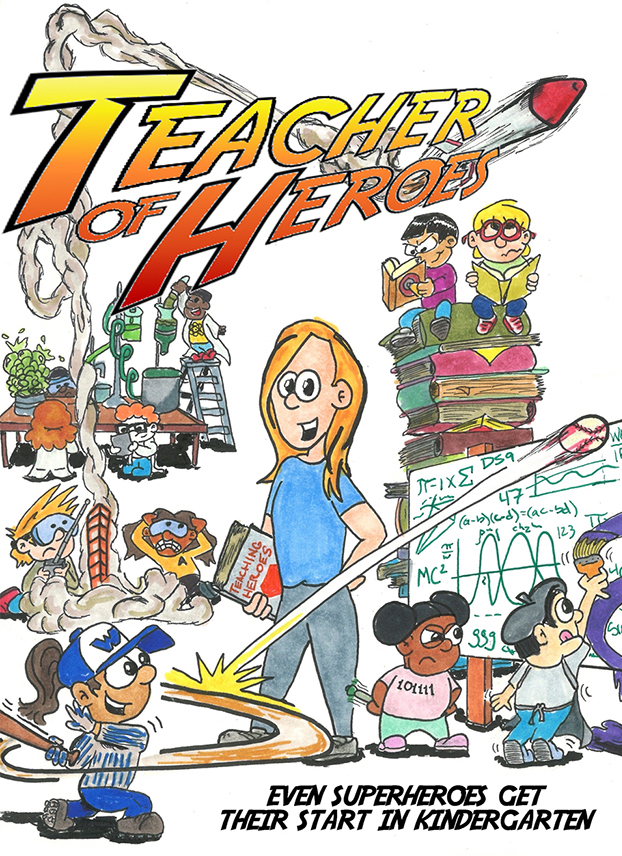
TitleTeacher of Heroes

Synopsis:  Teachers of Heroes is a family fantasy comedy about young kids with developing superpowers. Their teacher, Mrs. Porter, works with this group of new heroes to unlock their confidence and help them embrace their superhuman potential.

Starring: Reese Witherspoon (my husband says Brie Larson!)

TaglineEven superheroes get their start in kindergarten.

My husband Ryan is a very talented artist and created a movie poster to go along with it!


Do you have any words of advice for teachers (rookies or veterans)?

Rookie Teachers: There will be so much new for so long. It can be overwhelming and exhausting. Breathe and take the time to get to know your students. I promise you, the rest will fall into place.

Veteran Teachers: After years of being in this profession, it can be difficult to not be weighed down by all the challenges we face each and every day. In those hard moments, take the time to really tune in to your class and teaching. I promise you will find so many magic moments that will propel you to all the positivity and possibility you began with all those years ago.

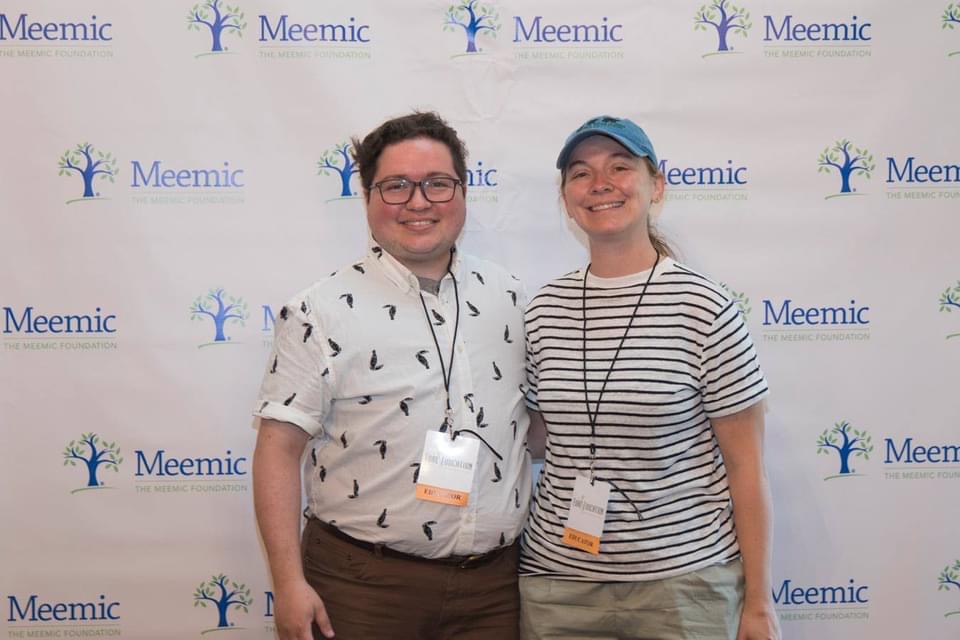
Meemic “Fore Education” Golf Outing

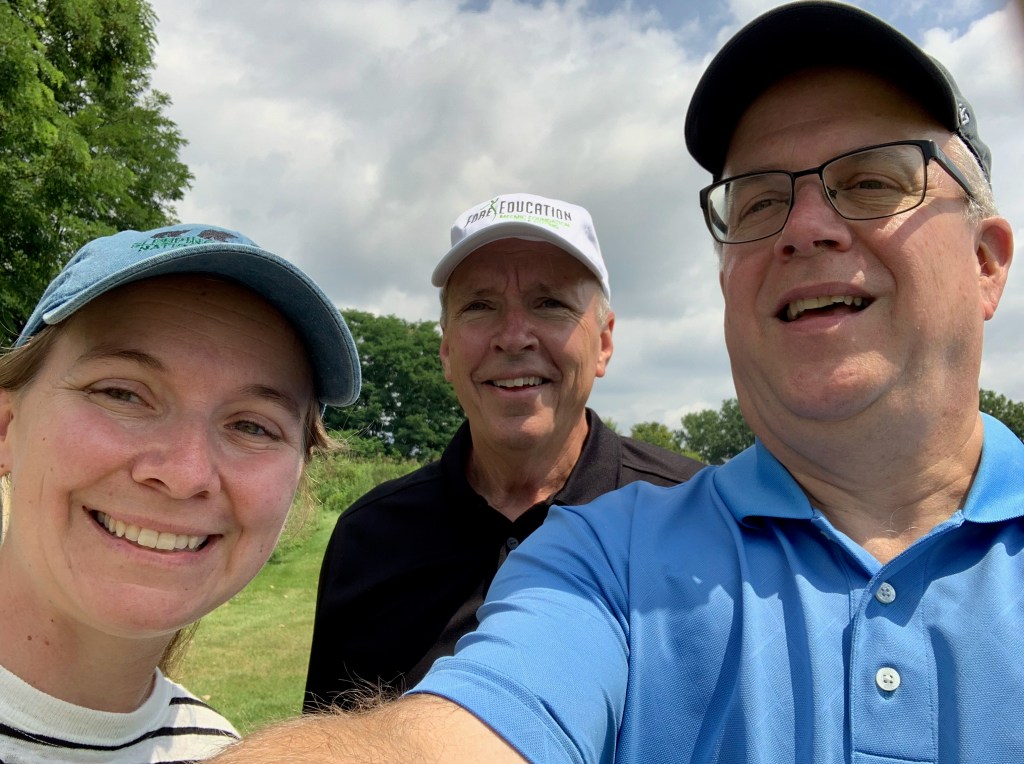
At the end of July I went out of my comfort zone a bit and decided to golf in the Meemic Foundation Golf Outing. I have played golf for years for fun with my dad and grandpa, but had never played in a scramble before. I got to meet lots of wonderful people that work for Meemic and AAA who all support initiatives for educators across the state through the Meemic Foundation. The Foundation does incredible work to provide grants for teachers in a myriad of different classroom supports and also sponsors the Michigan Teacher of the Year program for the state of Michigan. Though I was nervous, I had a blast playing with Jim and Brian. Once I got the “swing” of things (pun intended), I relaxed, had fun, and even had some great shots. I look forward to doing this event again next year!